Drivetrain Repair
Drivetrain Repair
The drivetrain is a chain. Engine power flows through the transmission, into the transfer case, down the driveshaft, into the differential, and out to the axles. Every link in that chain has to work correctly for the vehicle to move. When one link fails, the symptoms can appear anywhere along the chain — sometimes far from the actual problem.
Apollo Transmission Service diagnoses and repairs drivetrain components for drivers across Jackson County. We work on rear-wheel drive, front-wheel drive, 4WD, and AWD vehicles. If your vehicle is vibrating, clunking, or not transferring power correctly, we can find the source.
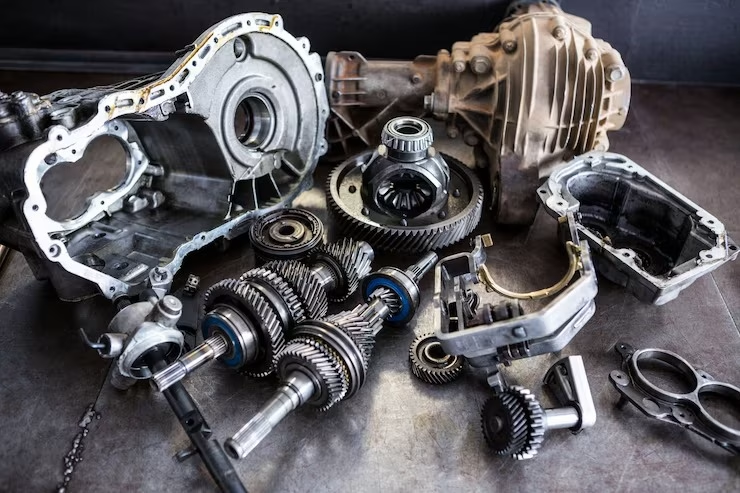
The Drivetrain System, Component by Component
Understanding the drivetrain starts with knowing what is in it.
Transmission. Changes gear ratios to match engine speed to driving conditions. Covered on our automatic transmission repair and manual transmission repair pages.
Transfer case. Splits power between the front and rear axles in 4WD and AWD vehicles. Covered on our transfer case repair page.
Driveshaft. Transfers power from the transmission or transfer case to the differential. Spins at high speed and must be balanced.
U-joints and CV joints. Allow the drivetrain to flex as the suspension moves. U-joints are used on rear-wheel drive driveshafts; CV joints are used on front-wheel drive axles and independent suspensions.
Differential. Transfers power from the driveshaft to the axles while allowing the wheels to spin at different speeds in turns. Covered on our differential repair page.
Axles and axle shafts. Carry power from the differential to the wheels.
Each component has its own failure modes, but symptoms can be confusing. A vibration at highway speed could come from the driveshaft, a U-joint, a differential bearing, or even a worn engine mount. That is why drivetrain diagnosis requires looking at the whole system.
Symptoms That Point to Drivetrain Trouble
Drivetrain problems usually announce themselves through noise, vibration, or difficulty transferring power. These are the ones to watch for.
-
Vibration at highway speed — Often driveshaft balance, worn U-joints, or worn differential bearings
-
Clunking when accelerating or shifting — Worn U-joints, differential mounts, or transmission mounts
-
Clicking in turns — Classic sign of a worn CV joint
-
Whining or howling — Often differential or transfer case related
-
Grinding — Could be transmission, transfer case, or differential
-
Leaking fluid — From the transmission, transfer case, or differential
-
Difficulty engaging 4WD — Often transfer case or actuator related
-
Uneven tire wear — Can indicate differential or drivetrain issues
-
Loss of power to one wheel — Axle or differential issue
-
Burning smell — Often transmission or clutch related
Because drivetrain symptoms can overlap, isolating the source requires a systematic approach.
How We Isolate Drivetrain Problems
Diagnosing drivetrain issues is not about guessing which component is failing. It is about testing each part of the system in a logical order until the source is identified.
Step 1 — Listen to the driver. Where is the noise coming from? When does it happen? Is it present at all speeds or only under specific conditions? That information narrows the field quickly.
Step 2 — Inspect the vehicle. With the vehicle on a lift, we check for obvious signs — leaks, damaged boots, loose mounts, or worn joints.
Step 3 — Test drive. Some drivetrain problems only show up under specific conditions — at highway speed, during turns, or under load. We reproduce the conditions to confirm the symptom.
Step 4 — Isolate the component. If the source is not obvious, we may disconnect components or use specialized tools to isolate which part is producing the symptom.
Step 5 — Confirm the diagnosis. Once we know what is failing, we explain it and provide a written estimate before any work begins.
For a deeper look at how we diagnose transmission-related issues, see our transmission diagnostics page.
Common Drivetrain Failures
Different components fail at different rates. These are the ones we see most often.
U-joints. The universal joints in a driveshaft wear out over time. A worn U-joint produces clunking when you accelerate or shift, and sometimes a vibration at speed.
CV joints and boots. CV joints are packed in grease and protected by a rubber boot. When the boot tears, grease escapes, and the joint wears quickly. Clicking in turns is the classic symptom.
Driveshaft. Driveshafts can develop balance issues, worn yokes, or damaged tubing. A bent or unbalanced driveshaft produces vibration that gets worse with speed.
Differential. Ring and pinion wear, bearing failure, or limited-slip clutch wear all cause differential problems. Our differential repair page covers those in detail.
Axle shafts. Axle shafts can bend from impacts, wear at the splines, or break under heavy load. Broken axles leave the vehicle unable to move.
Mounts and bushings. Transmission mounts, differential mounts, and engine mounts all affect how the drivetrain transfers power. When they fail, you feel clunks and vibration.
Transfer case. Chain stretch, clutch pack wear, and actuator failure are common transfer case issues. Our transfer case repair page covers that work.
Why Choose Apollo Transmission for Drivetrain Repair
Apollo Transmission Service has been repairing driveline components for Jackson County drivers for decades. We diagnose before we recommend. We explain what we find in plain language. And we stand behind the work.
For a broader look at our shop, visit our transmission shop page. For individual drivetrain components, see our differential repair and transfer case repair pages. For truck-specific work, see our truck transmission repair page.
Ready to get your drivetrain checked? Call Apollo Transmission Service at (816) 358-3484 to schedule an appointment or ask about your vehicle.
What Repair Involves
Drivetrain repair depends on what is actually failing. The scope ranges from replacing a single worn joint to rebuilding multiple components.
U-joint replacement. A worn U-joint is replaced with a new one. This is a straightforward job when the driveshaft is accessible.
CV joint and boot replacement. If the boot is torn but the joint is still good, we may be able to replace just the boot. If the joint is already damaged, the joint or axle assembly is replaced.
Driveshaft service. Driveshafts can be balanced, repaired, or replaced. We assess whether the shaft can be saved or needs replacement.
Axle shaft replacement. A bent or broken axle shaft is replaced with a new one. This requires disassembling the differential and wheel hub.
Differential repair. Covered on our differential repair page.
Transfer case repair. Covered on our transfer case repair page.
Mount and bushing replacement. Worn mounts are replaced to restore proper drivetrain alignment and reduce vibration.
Full drivetrain rebuild. When multiple components are worn, we may recommend a coordinated repair that addresses all the affected parts together. Our transmission rebuilding page covers the general rebuild process. For replacement units, our transmission replacement page covers how we source them.
Areas We Serve
Apollo Transmission Service is located at 10006 E US Highway 40 in Independence, Missouri. Drivers from across Jackson County and the surrounding communities bring their drivetrain work to us.
Our service area includes:
If you are not sure whether we serve your area, give us a call at (816) 358-3484. If you can get the vehicle to our shop, we can help.
Frequently Asked Questions
How do I know if my drivetrain has a problem?
Vibration, clunking, clicking in turns, and unusual noises are common signs. The location of the noise or vibration often points to a specific component.
What does drivetrain repair cost?
Cost depends on what is failing. A U-joint replacement is less expensive than a full drivetrain rebuild. Contact us for a quote after we diagnose the vehicle.
Can you repair the drivetrain without removing major components?
Some repairs, like U-joint replacement or CV boot replacement, are relatively quick. Others, like axle shaft or differential repair, require more disassembly.
What kind of fluid does my drivetrain use?
Different components use different fluids. Transmissions use transmission fluid, differentials and transfer cases use gear oil, and CV joints use grease. We use the manufacturer-specified fluids for your vehicle.
Do you work on AWD and 4WD vehicles?
Yes. We service rear-wheel drive, front-wheel drive, 4WD, and AWD drivetrains.
Do you offer a warranty on drivetrain repairs?
Contact us to discuss warranty terms for your specific repair.