Automatic Transmission Repair
Automatic Transmission Repair
Modern automatic transmissions shift so smoothly that drivers often forget they are there. That is the point. The transmission handles gear changes on its own while you focus on the road. When it starts behaving badly — a hesitation here, a jolt there — most drivers notice immediately but have no idea what is causing it.
Apollo Transmission Service works on automatic transmissions every day. We handle imports, domestics, trucks, SUVs, and the occasional restoration project. Our job is to figure out what is failing and recommend the repair that actually solves the problem. No guesswork. No unnecessary work.
What Makes an Automatic Transmission Different
A manual gearbox is simple by comparison. You press the clutch, move the shifter, and the gears engage mechanically. The driver does the thinking.
An automatic does all of that through fluid pressure and electronics. Inside the case, a set of planetary gears, clutch packs, and bands are engaged and released in sequence to produce each gear ratio. A valve body routes fluid to the right places at the right moments. A computer reads sensors and tells the valve body what to do.
That complexity creates failure modes that do not exist in manual transmissions. A stuck solenoid can mimic a mechanical failure. A bad pressure sensor can cause harsh shifts that look like internal damage. Diagnosing an automatic correctly means understanding all of these systems, not just the gears.
Drivers with manual transmissions should visit our manual transmission repair page instead.

Symptoms Automatic Transmission Owners Should Not Ignore
Automatic transmission problems rarely start as catastrophic failures. They build. Catching them early usually means a simpler repair.
Here is what to watch for:
-
Slipping — RPMs climb but the vehicle does not accelerate the way it should
-
Delayed engagement — A pause between shifting into drive or reverse and feeling the transmission grab
-
Harsh shifts — Jolts, clunks, or lurches between gears
-
Flare shifts — RPMs spike briefly during a shift before the next gear engages
-
Whining or humming — Noise that changes with vehicle speed
-
Shuddering — A vibration felt during light acceleration, often in overdrive
-
Warning light — A transmission or check engine light on the dash
-
Fluid leaks — Red or dark fluid pooling under the vehicle
-
Burning smell — Usually a sign of overheated fluid and slipping internals
-
Limp mode — The transmission locks into one gear to protect itself
Some of these symptoms have simple causes. Others do not. A diagnostic tells you which category you are in.
Common Automatic Transmission Failures
Not every automatic transmission fails the same way. Different units have different weak points. But most problems fall into a handful of categories.
Solenoid failures. Solenoids are electric valves that control fluid flow inside the transmission. When one sticks or fails, shifts become erratic or disappear entirely. Solenoid replacement is often the least invasive repair.
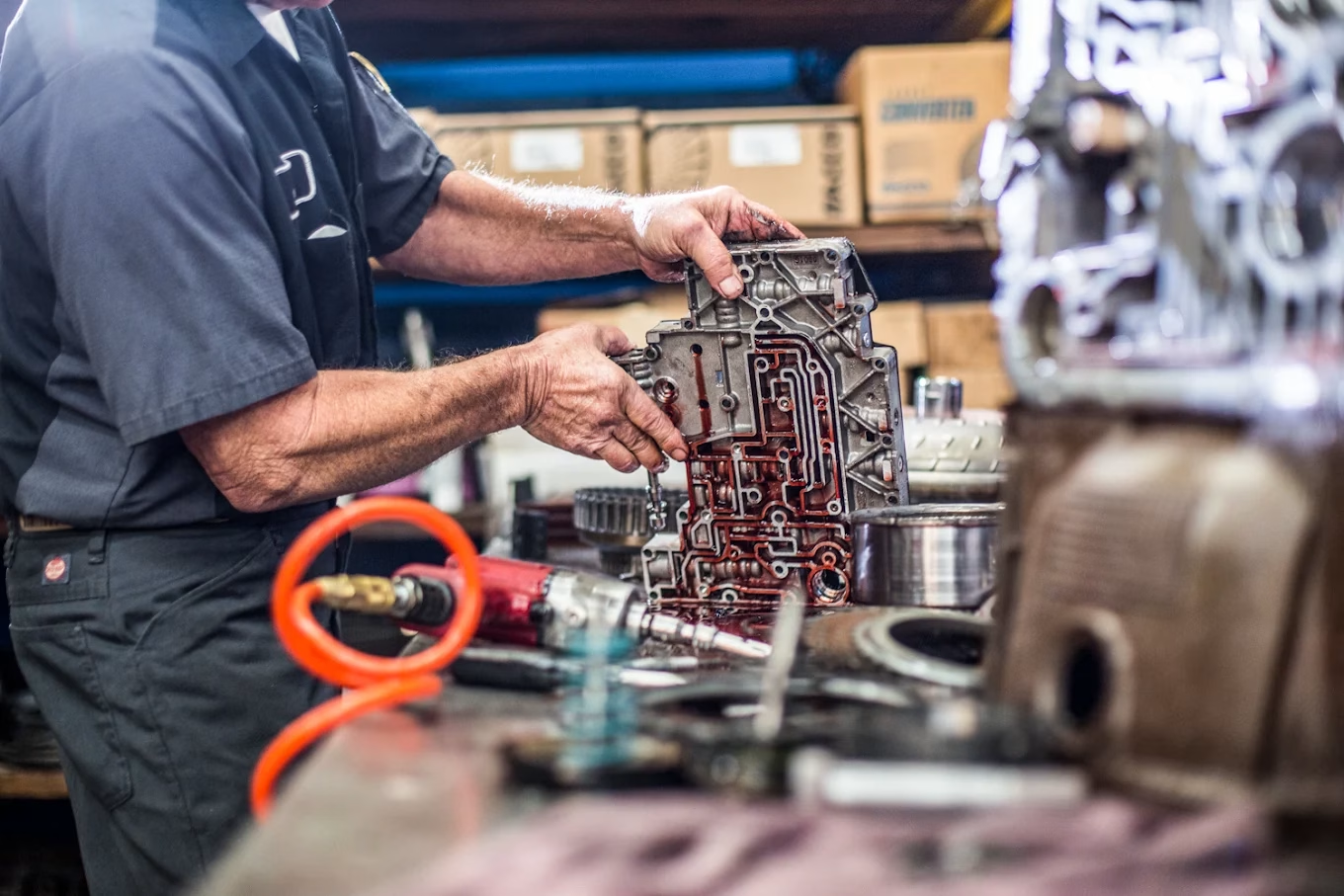
Valve body wear. The valve body is a maze of channels and valves that route fluid. Over time, bores wear and valves stick. This causes delayed or harsh shifts. Valve body repair or replacement is common on higher-mileage units.
Clutch pack wear. Inside the transmission, clutch packs engage and release to change gears. The friction material wears over time. When it wears out, the transmission slips. Replacing clutch packs requires removing and disassembling the transmission.
Torque converter failure. The torque converter connects the engine to the transmission and multiplies torque at low speeds. When it fails, you get shuddering, slipping, or a complete loss of drive.
Fluid degradation. Transmission fluid breaks down over time. When it does, it loses its ability to lubricate and cool. This accelerates wear on every internal component.
Electronic control failure. The transmission control module, wiring harness, or sensors can fail. These failures can produce symptoms that look mechanical but are actually electrical.
If the diagnosis points to internal damage, our transmission rebuilding page explains what a rebuild involves. If replacement makes more sense, our transmission replacement page covers that path. For a deeper look at how we diagnose automatic transmission problems, see our transmission diagnostics page.
Repair Paths for Automatic Transmissions
Once we know what is failing, the repair path depends on where the problem lives.
In-vehicle repairs. Solenoids, sensors, valve body components, and fluid services can often be handled without removing the transmission. These are the fastest and least expensive options when they address the root cause.
Transmission-out repairs. Internal clutch packs, bearings, and hard parts require the transmission to come out. This increases labor cost and downtime, but it is the only way to access certain components.
Rebuild or replacement. When the damage is extensive or the unit has high mileage, a full rebuild or replacement may be the better investment. We discuss both options and help you decide which makes sense for your vehicle.
How We Handle Every Automatic Transmission Job
Every vehicle that comes through our shop for automatic transmission work follows the same process. The order is deliberate — it protects you from paying for repairs you do not need.
Diagnose first. We confirm what is failing before recommending anything. Some automatic transmission symptoms come from outside the transmission entirely. We check those possibilities first.
Explain the findings. Once we know what is wrong, we explain it in plain language. You get a written estimate for the repair with parts, labor, and timeline.
Repair to spec. Every repair follows manufacturer procedures. We use quality parts and test the repair before the vehicle leaves the shop.
Verify the fix. Every automatic transmission job ends with a road test. We verify shift quality, pressure, and function before handing back the keys.
Why Drivers Trust Apollo With Their Automatic Transmissions
Apollo Transmission Service has been working on automatic transmissions for Jackson County drivers for decades. We diagnose before we recommend. We explain what we find in plain language. And we stand behind the work.
For truck owners who need automatic transmission service on work vehicles, see our truck transmission repair page. For 4WD and AWD issues that involve the transfer case, see our transfer case repair page. For a broader look at our shop, visit our transmission shop page.
Ready to get your automatic transmission checked? Call Apollo Transmission Service at (816) 358-3484 to schedule an appointment or ask about your vehicle.
Frequently Asked Questions
What is the most common automatic transmission repair?
Solenoid and valve body work top the list. These are often the least invasive repairs and the most cost-effective when they solve the problem.
Can you repair my automatic transmission without removing it?
Sometimes. Solenoid, sensor, and valve body repairs can often be done in the vehicle. Internal clutch work requires removal.
How long will my vehicle be in the shop?
Simple repairs may finish the same day. Complex work takes longer. We give you a realistic timeline after diagnosing the vehicle.
Do you work on CVT or dual-clutch transmissions?
Contact us with your vehicle details. Coverage depends on the specific unit and parts availability.
What kind of warranty do you offer on automatic transmission repairs?
Contact us to discuss warranty terms for your specific repair. Terms vary by service type.