Automatic Transmission Repair in Raytown Missouri
Automatic Transmission Repair in Raytown Missouri
Most drivers in Raytown Missouri learn their transmission has a problem the same way. A shudder at highway speed. A delay when shifting into drive. A warning light that stays on after the engine starts. By the time these symptoms show up, something inside the transmission has already started to wear or fail.
Apollo Transmission Service works on automatic transmissions for drivers across Jackson County. We handle imports and domestics, cars and trucks, daily drivers and restoration projects. Our approach is simple: find out what is actually wrong, explain it clearly, and fix what needs fixing.
The Difference Between Automatic and Manual Service
A manual gearbox relies on the driver to engage and disengage gears with a clutch pedal and shifter. The connection is direct and mechanical. The driver does the thinking.
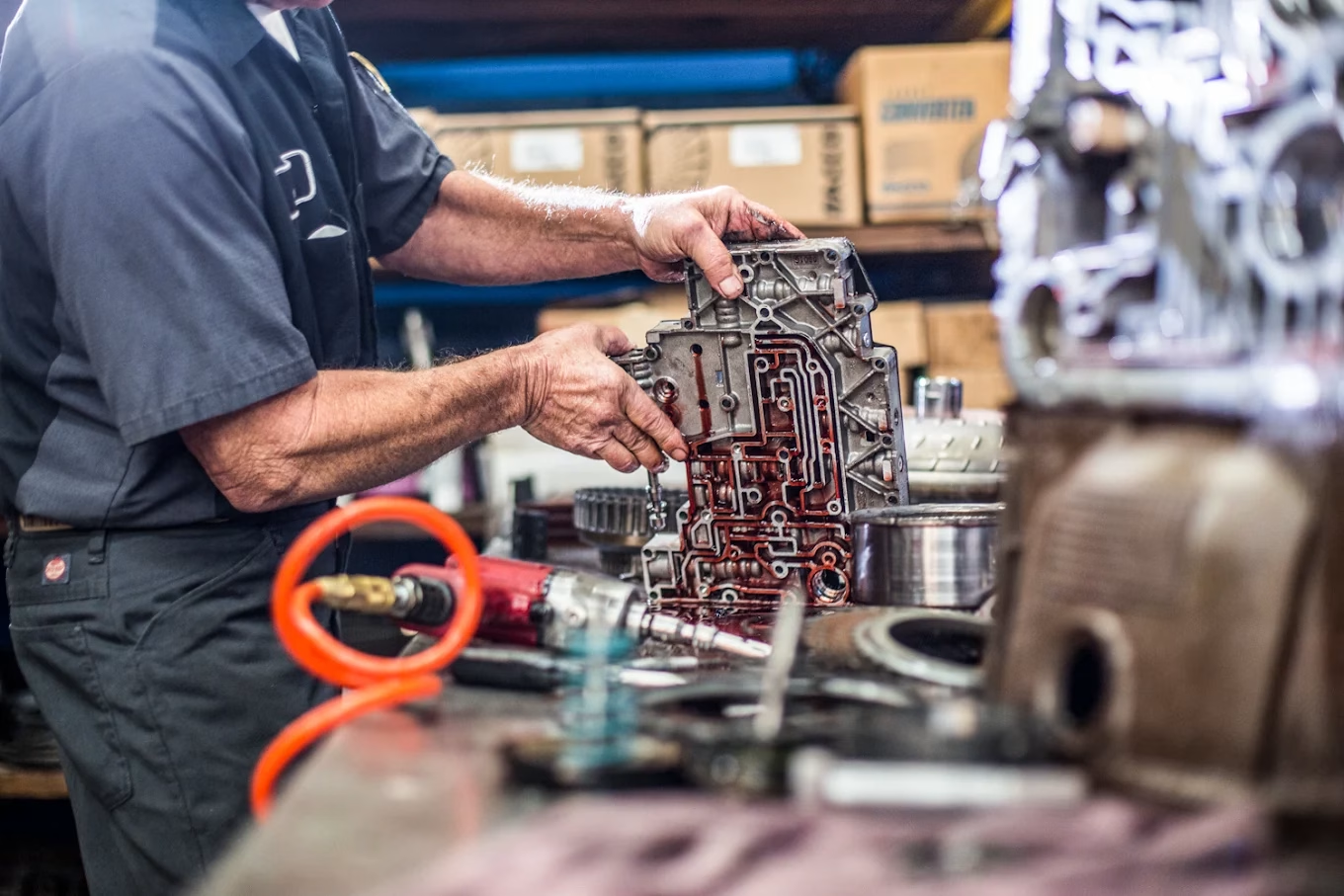
An automatic does the work on its own. Inside the case, planetary gears, clutch packs, and bands engage and release in sequence to produce each gear ratio. Fluid pressure drives those engagements. A valve body routes the fluid. A computer reads sensors and tells the valve body what to do and when.
That complexity is why automatic transmission problems often start in the control systems rather than the gears themselves. A sticking solenoid or a failing sensor can produce symptoms that look mechanical. Getting the diagnosis right means understanding the electronics, the hydraulics, and the mechanical components working together.
If your vehicle has a manual transmission, our manual transmission repair page covers clutch and gearbox work.

Components That Commonly Fail
Not every automatic transmission fails the same way. Different units have different weak points. But most problems trace back to a handful of components.
Solenoids. Electrically controlled valves that direct fluid flow inside the transmission. When one sticks or fails, shifts become erratic or disappear.
Valve body. A maze of channels and valves that route fluid. Over time, bores wear and valves stick. This causes delayed or harsh shifts.
Clutch packs. Friction discs that engage and release to change gears. The friction material wears. When it does, the transmission slips.
Torque converter. Connects the engine to the transmission and multiplies torque at low speeds. Failures produce shuddering, slipping, or loss of drive.
Transmission fluid. Breaks down over time. When it does, it loses its ability to lubricate and cool. This accelerates wear on everything inside.
Electronic controls. The transmission control module, wiring harness, and sensors can fail. These failures can produce symptoms that look mechanical but are actually electrical.
If the diagnosis points to internal damage, our transmission rebuilding page explains what a rebuild involves. If replacement makes more sense, our transmission replacement page covers that path. For a deeper look at how we diagnose automatic transmission problems, see our transmission diagnostics page.
Warning Signs Worth Taking Seriously
Some symptoms clearly point to the transmission. Others can come from related systems. All of them are worth checking.
-
Slipping between gears
-
Delayed engagement when shifting into drive or reverse
-
Harsh shifts, clunks, or jolts during gear changes
-
Flare shifts — RPM spikes during a shift
-
Whining, humming, or grinding that changes with speed
-
A transmission warning light or check engine light
-
Fluid pooling under the vehicle after it sits
-
A burning smell after driving
-
Shuddering during light acceleration
-
The vehicle entering limp mode
If your vehicle is a manual, our manual transmission repair page covers clutch and gearbox diagnostics.
How a Visit to Our Shop Works
Step 1 — Tell us what you are feeling. When you call, describe the symptom and when it happens. Cold start or warm? Under acceleration or coasting? Specific gears or speeds? That information narrows the diagnosis fast.
Step 2 — We test before we recommend. We inspect the vehicle, run the diagnostic, and identify what is actually failing. If the problem is not the transmission, we tell you.
Step 3 — You get a written estimate. No work begins until you approve it. The estimate covers parts, labor, and timeline.
Step 4 — We fix it and verify the repair. Every automatic transmission job ends with a road test to confirm shift quality, pressure, and function before you drive away.
For work trucks and heavier vehicles, our truck transmission repair page covers that side of the work. For 4WD and AWD transfer case issues, our transfer case repair page covers that work.
Why Raytown Missouri Drivers Bring Their Automatic Transmissions to Apollo
Apollo Transmission Service has been working on automatic transmissions for Jackson County drivers for decades. We diagnose before we recommend. We explain what we find in plain language. And we stand behind the work.
For a broader look at our shop, visit our transmission shop page.
Ready to get your automatic transmission checked? Call Apollo Transmission Service at (816) 358-3484 to schedule an appointment or ask about your vehicle.
Frequently Asked Questions
What are the most common automatic transmission failures?
Solenoid failures, valve body issues, and worn clutch packs top the list. Fluid condition often tells us which is likely before we open anything up.
How much does automatic transmission repair cost in Raytown Missouri?
Cost depends on what is failing. A solenoid replacement costs far less than a rebuild. We give you a written estimate after the diagnostic.
Can you repair an automatic transmission without removing it?
Sometimes. Solenoids, sensors, and valve body components can often be serviced in the vehicle. Internal clutch packs and hard parts require removal.
How long does automatic transmission repair take?
Simple repairs may finish in a day. More involved work takes longer. We give you a realistic timeline after we diagnose the vehicle.
Do you work on CVT transmissions?
Contact us with your vehicle details. CVT service depends on the specific unit and parts availability.
Do you offer a warranty on automatic transmission repairs?
Contact us to discuss warranty terms for your specific repair. Warranties vary by service type.