Performance Transmission Builds in Raytown Missouri
Performance Transmission Builds in Raytown Missouri
An engine build is easy to talk about. A cam, heads, a tune — those numbers are visible and measurable. The transmission is different. It does not show up on a dyno sheet. It fails quietly, then suddenly. A clutch pack starts slipping at wide-open throttle. A shaft twists under torque it was never meant to handle. By the time the driver feels it, damage is already done.
Apollo Transmission Service builds performance transmissions for drivers in Raytown Missouri and across Jackson County. We match the build to the power the engine actually makes and to the way the vehicle is really driven. If your transmission is the part holding you back, we can address it.
Why the Factory Transmission Has Limits
Every transmission is engineered to a target. That target includes cost, fuel economy, shift smoothness, and durability at stock power. The factory unit is designed to work at the power level the engine made on the showroom floor, under normal driving conditions, for a reasonable service life.
When that power level goes up, the math changes. The transmission is now handling torque it was never speced for. The clutch packs clamp harder. The converter absorbs more shock. The valve body tries to flow fluid at pressures it was not calibrated for. The factory build does not fail immediately, but the wear rate accelerates. Eventually, something gives.
The same thing happens when driving style changes. A transmission that spends its life cruising at partial throttle is not the same as one that sees wide-open throttle every day. Track use, drag use, and aggressive street driving all put the transmission under conditions the factory did not prioritize.
How a Performance Build Differs From a Standard Rebuild
A standard rebuild restores the transmission to factory condition. That is what most drivers need when a transmission wears out from normal use.
A performance build does something different. It changes the components that limit the transmission’s capability. The goal is not to restore the original spec. The goal is to raise it.
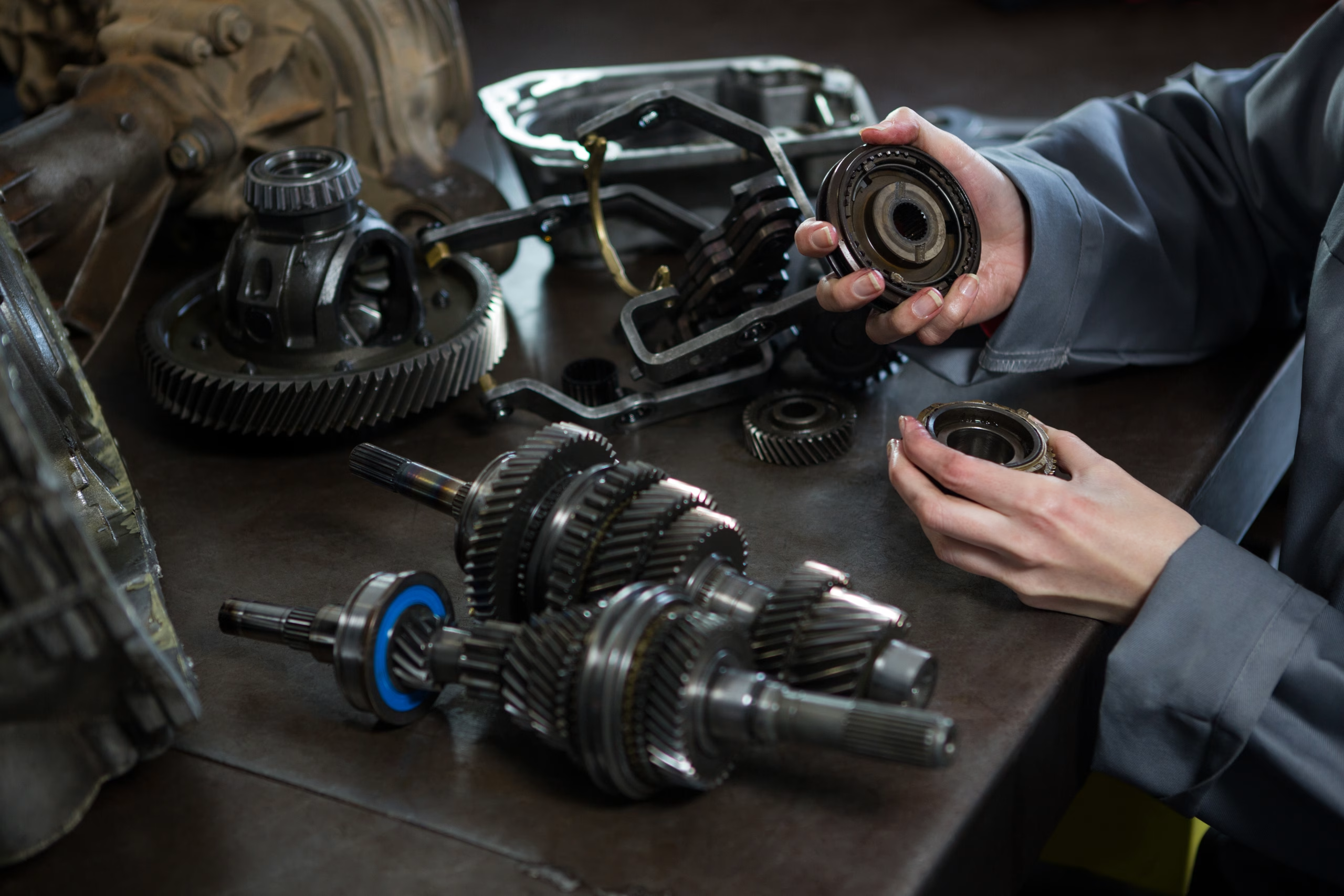
Where a standard rebuild uses factory-equivalent friction material, a performance build uses material rated for higher torque. Where a standard rebuild uses a factory torque converter, a performance build uses a converter with a different stall speed. Where a standard rebuild uses the factory valve body calibration, a performance build modifies the valve body for quicker shifts and higher line pressure.
The difference is not one part. It is the entire build spec.
For drivers who need a towing or commercial build instead, see our heavy-duty transmission builds page. For drivers who need a factory-equivalent restoration, our transmission rebuilding page covers that option.
The Components That Limit Power Handling
Certain parts inside a transmission determine how much torque it can handle. These are the parts that matter most in a performance build.
The friction material on clutch packs. Factory friction material is designed for smooth engagement and long life at stock power. It can handle more, but only up to a point. Under high torque, it slips. Once it slips, heat builds up fast and the material degrades.
The number of clutch plates. Some transmissions can accept additional plates in the clutch packs. More plates means more surface area, which means more torque capacity.
The torque converter’s stall speed and internals. The stall speed determines when the converter locks up and how the engine delivers power to the wheels. Higher stall speeds help a modified engine get into its power band. Stronger internals help the converter survive the added stress.
The valve body calibration. Shift pressure and timing affect both performance and durability. A factory calibration is tuned for smoothness and fuel economy. A performance calibration is tuned for quicker shifts and firmer engagement.
The shafts. Input, output, and intermediate shafts carry the torque the engine makes. Factory shafts can handle more than stock, but only up to a point. At high power, they can twist or snap.
The bearings. Bearings carry the load the shafts put on them. Under higher torque, the load is higher. Factory bearings can fail sooner under those conditions.
The seals and gaskets. Higher pressures and temperatures stress seals more than normal driving. A performance build uses seals rated for those conditions.
Matching the Build to the Engine
Every performance transmission should be built to match the engine it sits behind. That means knowing the actual torque figure, not the estimated one.
When we discuss a build, we ask:
-
What is the engine’s torque output? Peak torque is the number that matters. Horsepower sells, torque is what the transmission has to survive.
-
How is the torque delivered? A naturally aspirated engine and a turbocharged engine with the same peak torque load the transmission differently. The way torque ramps in changes the stress.
-
What does the vehicle weigh? A heavier vehicle puts more stress on the drivetrain for the same torque output.
-
How will the vehicle be driven? Street, track, drag, or a mix. Each use case has different durability demands.
-
What other upgrades are in the drivetrain? A built transmission connected to a factory differential or axles may just move the weak point downstream.
A build that matches the engine performs better and lasts longer than a build that is either underspec’d or overbuilt. Overspec’d builds are not a problem, but they cost more than necessary. The goal is to build the right transmission for the vehicle and its use.
What the Build Process Looks Like
The process starts with removing the transmission and taking it apart. Every component is inspected and measured. We compare what we find against the original specification and against the requirements of the build.
Once we know what needs attention, we plan the build spec with the customer. That spec determines which parts get replaced, which get upgraded, and which get reused.
Parts are ordered for the build. This is often the longest lead time in the process. Some performance components are readily available; others are built to order.
The transmission is assembled to performance specifications. Clearances are set to handle the new power level. Torque specs are followed. The valve body is calibrated or replaced.
Before installation, the transmission is tested. Fluid pressure is verified. Shift quality is confirmed. Any issues are addressed before the unit goes back in the vehicle.
After installation, the vehicle is road tested. Shifts are confirmed under load. If anything feels off, we address it before the vehicle leaves the shop.
Why Raytown Missouri Drivers Bring Their Performance Builds to Apollo
Apollo Transmission Service has been building and rebuilding transmissions for Jackson County drivers for decades. We discuss the build spec, match it to the actual power, and stand behind the work.
For a broader look at our shop, visit our transmission shop page. For towing and commercial builds, see our heavy-duty transmission builds page. For standard rebuilds, see our transmission rebuilding page.
Ready to discuss your performance build? Call Apollo Transmission Service at (816) 358-3484 to schedule an appointment or ask about your vehicle.
Areas We Serve
Apollo Transmission Service is located at 10006 E US Highway 40 in Independence, Missouri. Drivers from Raytown Missouri and across Jackson County bring their performance builds to us.
Our service area includes:
If you are not sure whether we serve your area, give us a call at (816) 358-3484. If you can get the vehicle to our shop, we can help.
Questions Raytown Missouri Drivers Ask About Performance Builds
How much torque can a performance build handle?
That depends on the specific components used. A mild build might add 30 to 50 percent over factory capacity. A full-race build can handle significantly more. We match the build to your actual torque output.
What does a performance transmission build cost?
Cost depends on the power level, the components needed, and the vehicle. A mild performance build costs less than a full-race setup. Contact us to discuss the build spec and get a quote.
Do I need a performance build if I only added a few bolt-ons?
Not always. Mild bolt-ons often do not exceed the transmission’s factory capacity. We assess the actual torque output and recommend a build only if needed.
Can I keep my factory transmission and just upgrade it?
Yes. Many performance builds start with the original transmission and upgrade the components that limit power handling. This is often less expensive than sourcing a different transmission.
Do you build manual transmission performance setups?
Yes. Our manual transmission repair page covers clutch and gearbox work for performance applications.
Do you offer a warranty on performance builds?
Contact us to discuss warranty terms for your specific build.